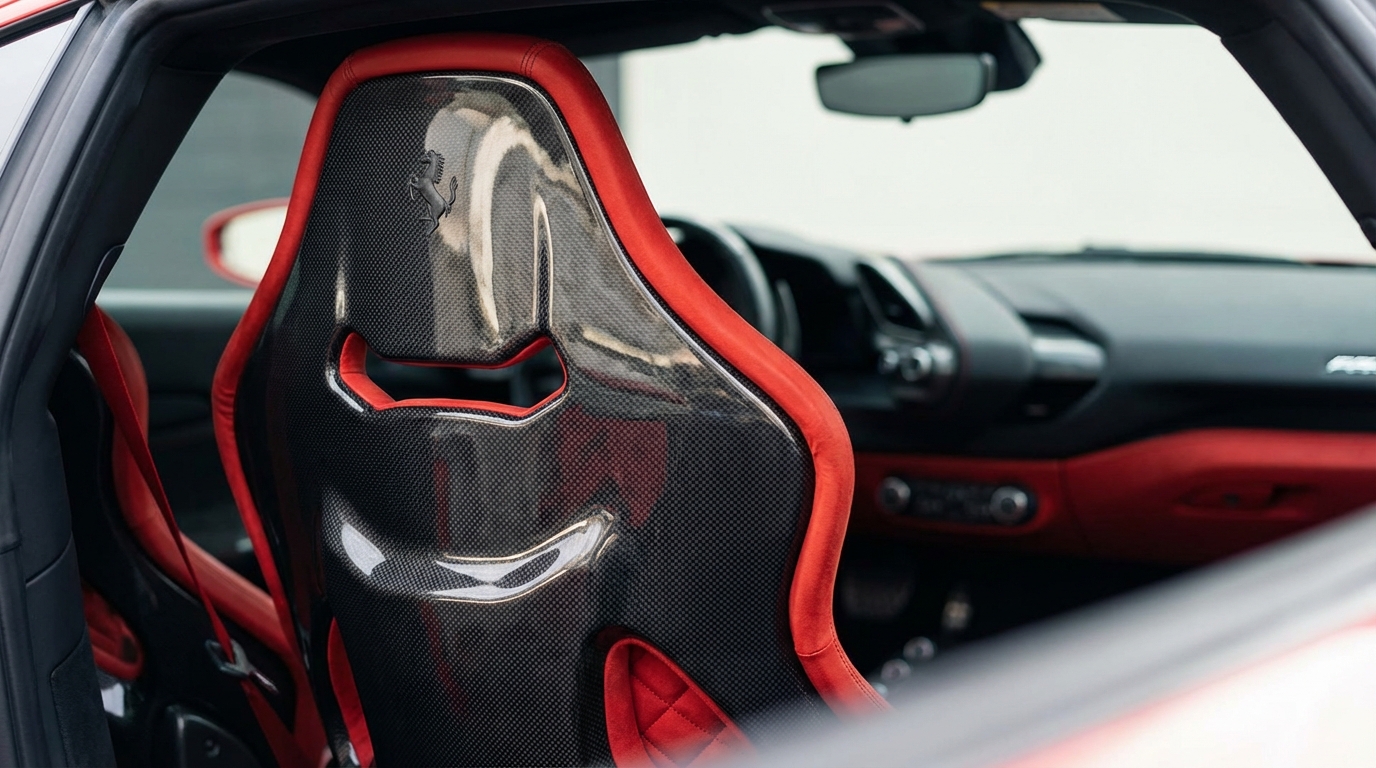
When you configure a modern Ferrari, ticking the options boxes can be an exercise in financial adrenaline. Among the most tempting, yet intimidating, choices are the carbon fiber racing seats. They look incredible—sculpted works of automotive art that promise a direct connection to the tarmac. But a nagging question remains for anyone planning to drive their Prancing Horse somewhere other than a racetrack: Can a lightweight shell with minimal padding actually be comfortable?
We spent considerable seat time exploring the reality of living with these high-performance thrones to separate the marketing hype from the ergonomic reality.
The Engineering and Aesthetics
Before discussing comfort, we must address the theater. Ferrari’s carbon fiber seats are stunning. The visible weave of the carbon shell is flawless, polished to a mirror finish that screams aerospace technology. They are incredibly light, shedding significant kilograms compared to standard electric seats, which lowers the car’s center of gravity.
Visually, they set a serious tone for the cabin. They tell the driver, “This is a machine built for purpose.” But that purpose is usually speed, not relaxation.
Initial Impressions: The Firm Hug
Sliding into the seat, the first sensation is one of absolute rigidity. There is zero “squish.” Unlike standard seats that accommodate your shape, these seats demand that you accommodate theirs.
However, once settled, a surprising realization dawns: the ergonomics are masterful. Ferrari didn’t just make a hard bucket; they sculpted a posture-correcting tool. The side bolsters are aggressive, locking your hips and torso into place, but they rarely feel intrusive unless you have a much wider-than-average frame. The seating position is aggressively low, connecting your senses directly to the chassis.
Dynamic Comfort vs. Static Comfort
To understand these seats, you must differentiate between two types of comfort:
- Static Comfort: How it feels sitting in traffic or parked. Here, the racing seats are merely adequate. The thin padding means that after about an hour on a straight highway, you will start to feel pressure points on your lower back and thighs. They are not grand touring armchairs.
- Dynamic Comfort: How it feels when driving passionately. This is where the seats transform from functional to exceptional.
When the road twists, standard seats allow your body to slide, forcing you to use your core muscles and knees to brace yourself against the door or center console. This causes fatigue over time. The carbon fiber racing seats eliminate this entirely. By holding you in a vice-like (yet surprisingly ergonomic) grip, you are completely relaxed even under heavy cornering loads. You don’t hold onto the steering wheel; you drive with it.
Living with Them Daily
Are they viable for a daily driver? That depends entirely on your tolerance and physical condition. Getting in and out requires a specific technique due to the high, rigid side bolsters—it’s more of an ingress/egress maneuver than simply sitting down.
Furthermore, these seats usually sacrifice electric adjustability (often limited to manual fore/aft and height adjustment via screws) and features like heating or ventilation to save weight. You are trading luxury conveniences for pure driving focus.
The Verdict
Are Ferrari’s carbon fiber racing seats comfortable? If you are measuring against a luxury sedan, absolutely not. They are firm, unforgiving of poor posture, and thinly padded.
However, if you measure comfort by the ability to drive hard without physical fatigue, they are peerless. They are functionally comfortable designed for the specific task of high-performance driving. If you plan to track your Ferrari or live for canyon carving on weekends, they are an essential upgrade that fundamentally improves the driving experience. For pure boulevard cruising, stick to the standard seats.