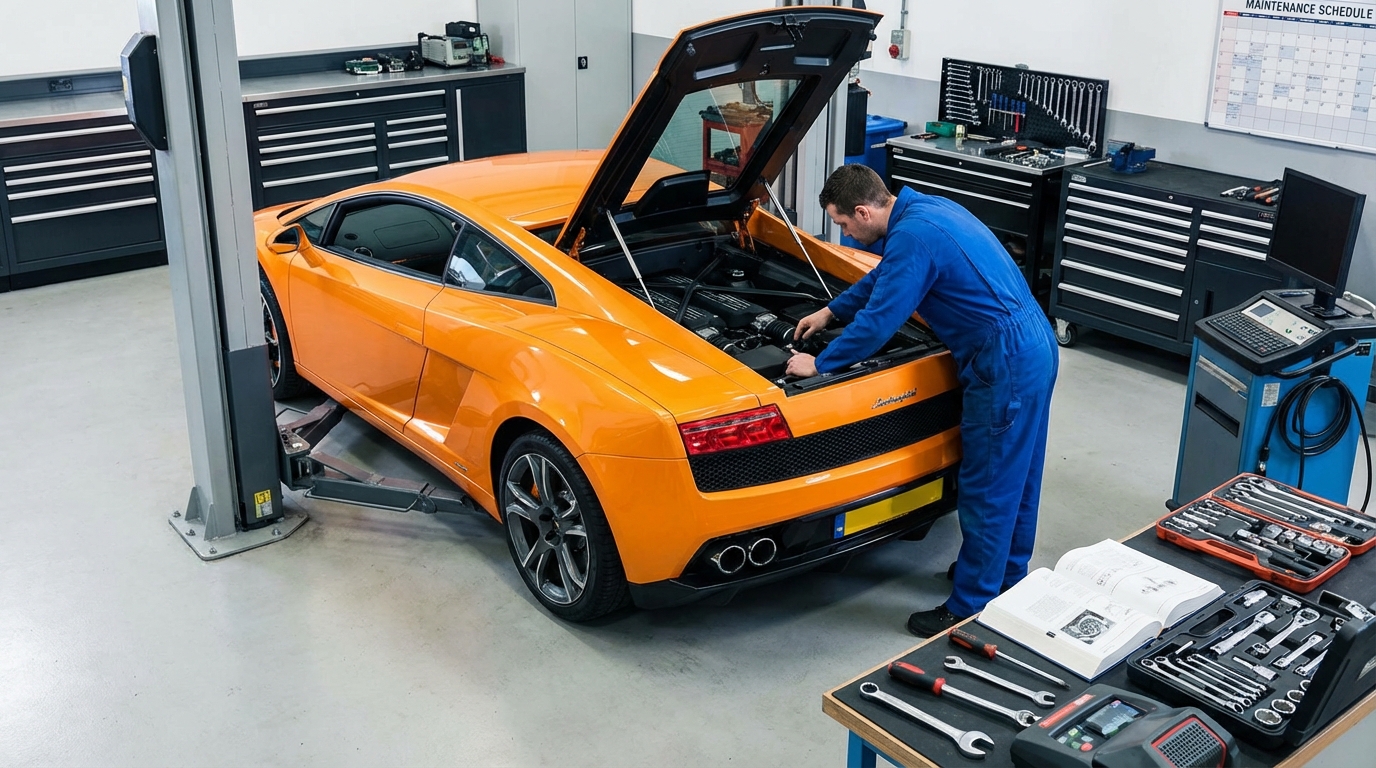
For many automotive enthusiasts, a Lamborghini is viewed as a piece of kinetic art, destined to spend most of its life attached to a battery tender in a climate-controlled garage, venturing out only for occasional car shows on sunny weekends. The idea of a "high-mileage" Lamborghini often seems like a contradiction in terms.
But what if you actually drive it? Driving a V10 or V12 bull past the 30,000, 50,000, or even the elusive 80,000-mile mark is a badge of honor. It proves these machines are engineering marvels built for speed, not just statues. However, reaching that milestone without catastrophic financial injury requires a totally different mindset toward maintenance than the standard factory booklet suggests. A high-mileage supercar is a glorious thing, but it demands rigorous, proactive care.
Redefining "High Mileage" in the Supercar World
First, we must adjust our expectations. In a reliable daily driver like a Honda, 100,000 miles is barely broken in. In the world of tight tolerances, massive heat generation, and 8,000+ RPM redlines, the clock ticks faster.
For a Lamborghini, particularly older models like the Gallardo or Murciélago, anything over 30,000 miles is entering significant territory where component wear begins to compound. While modern Audi-era Lamborghinis (Huracán, Aventador) are vastly more robust, they are still highly stressed machines. Treating a 50,000-mile Lambo like a 50,000-mile regular car is a recipe for disaster.
The Accelerated Maintenance Schedule
Once past the warranty period and into higher miles, forget the "by the book" annual service intervals. You need to move to a preventative model based heavily on usage and time.
Fluids: The Lifeblood
The cheapest insurance you can buy for a high-mileage exotic engine is frequent fluid changes. Do not stretch these intervals.
- Engine Oil: Forget annual changes if you drive regularly. High-revving engines shear oil down quickly. On a high-mileage example, consider changing the oil every 3,000 to 4,000 miles or every six months, whichever comes first. Use only the exact factory-spec oil.
- Transmission Fluid: This is crucial. Whether you have an older E-gear single-clutch system or a modern Dual Clutch (LDF) unit, clean fluid is vital. Old fluid can lead to slow shifts, overheating, and catastrophic gearbox failure. Halve the factory recommended interval for high-mileage cars.
- Coolant System Flush: V10s and V12s generate immense heat. The cooling system hoses, radiators, and pumps are under constant stress. Flush the coolant every two years regardless of mileage to prevent internal corrosion and ensure peak efficiency.
Critical Wear Items at 40k+ Miles
As the odometer climbs, parts that are often considered "lifetime" items on normal cars become regular maintenance items on a Lambo.
Suspension and Rubber Buildup
Massive sticky tires and incredibly stiff suspension setups chew through rubber bushings. By 40,000 or 50,000 miles, the suspension geometry will likely feel tired.
- Control Arm Bushings and Ball Joints: Listen for clunks over bumps and check for play in the wheels. Worn bushings destroy the precise handling feel these cars are known for. A full suspension refresh may be necessary around the 60k mark.
- Engine Mounts: The massive torque of a V12 will compress and eventually tear hydraulic engine mounts over time. Excessive vibration in the cabin usually indicates they are shot, putting extra stress on the drivetrain.
Clutches and Actuators (E-Gear Models)
If you own an older Gallardo or Murciélago with the E-gear transmission, clutch life is a constant anxiety. At high mileage, the focus shifts to the E-gear hydraulic pump. A failing pump won’t provide enough pressure for clean shifts, which will destroy a clutch rapidly. Have pump pressure tested regularly.
Brakes: The Five-Figure Question
Most high-mileage Lambos on the road today feature Carbon Ceramic Brakes (CCB). They offer incredible stopping power and no brake dust, and the rotors are touted as lasting the life of the car.
However, "lifetime" does not mean forever if the car is driven hard. While CCB pads will need replacing, if the rotors wear below minimum thickness or sustain impact damage, the replacement cost for all four corners can easily exceed $20,000. When buying or maintaining a high-mileage example, rigorous inspection of carbon rotor health is non-negotiable.
Conclusion: The Importance of Specialists
Driving a high-mileage Lamborghini is one of the automotive world’s greatest experiences. But realize that reactive maintenance—fixing things only when they break—is financial suicide with a supercar. Proactive, frequent, and specialized care from an experienced independent exotic shop is the only way to ensure your high-mileage bull remains a thrill rather than a stationary, expensive paperweight.