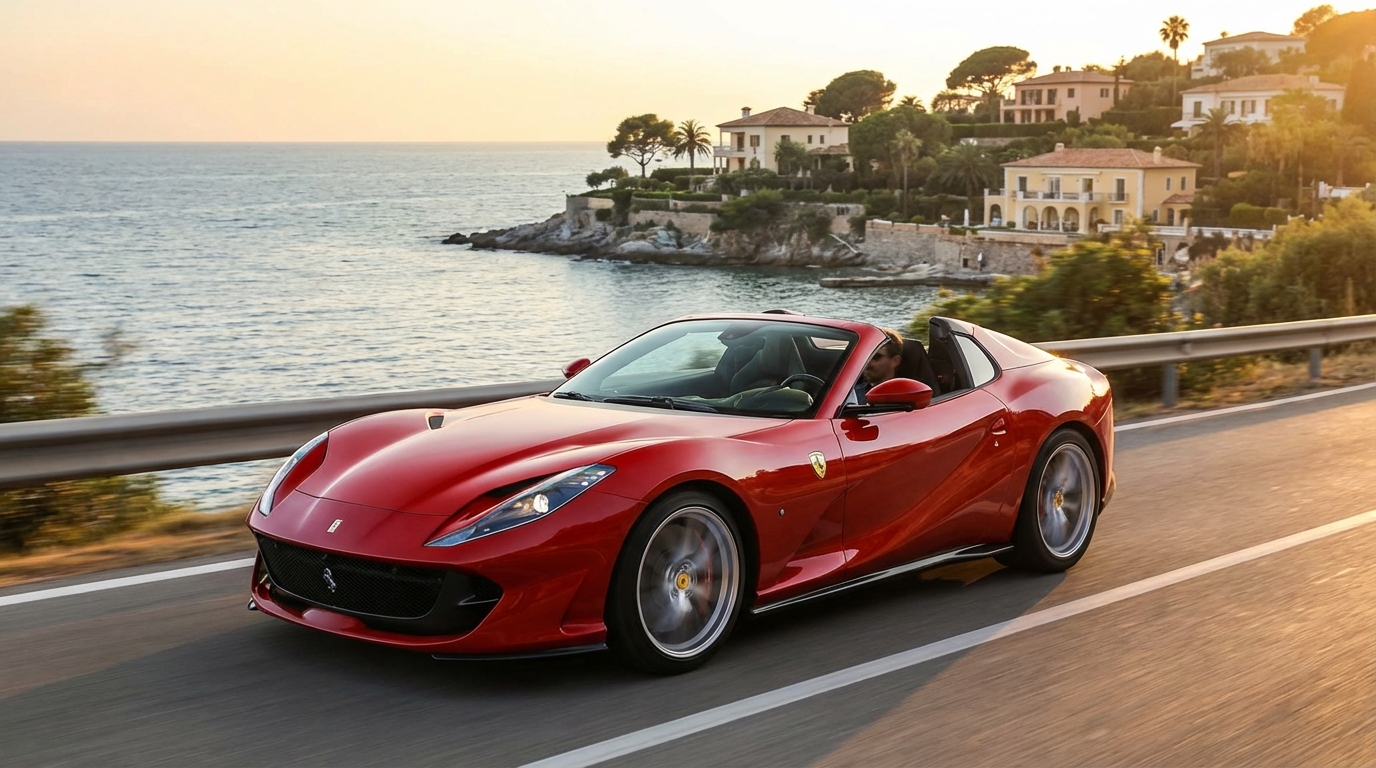
Introduction: The V12 Symphony and Financial Reality
When you purchase a Ferrari, you aren’t just buying transportation; you are acquiring a piece of automotive history, mechanical art, and membership into an exclusive club. The Ferrari 812 GTS represents the pinnacle of this experience: a front-engined, naturally aspirated V12 convertible that delivers 789 horsepower with the wind in your hair.
But beyond the emotion and the adrenaline, a Ferrari purchase is often a significant financial commitment. For many owners, the three-year mark is a crucial pivot point—the end of a typical lease or the time when the itch for the *next* Maranello creation strikes. The burning question remains: How does the Ferrari 812 GTS hold its value after three years on the road?
The Factors Protecting the 812 GTS Value
While most luxury vehicles face a steep depreciation curve the moment they leave the dealership lot, Ferrari operates in a different reality. The 812 GTS, in particular, benefits from several unique market forces that bolster its residual value after three years.
1. The “End of an Era” Status
The most significant factor supporting the 812 GTS valuation is the automotive industry’s shift toward hybridization and electrification. The 812 GTS is widely regarded as potentially one of the last series-production, non-hybrid, naturally aspirated V12 convertibles Ferrari will ever produce. This perception creates a “collectible” status while the car is still relatively new. Purists want that unfiltered V12 scream, and they are willing to pay for it.
2. Supply vs. Demand Dynamics
Unlike mass-market manufacturers, Ferrari carefully controls production numbers to ensure demand always slightly outstrips supply. While the 812 GTS isn’t a strictly limited edition like the *Competizione A*, getting an allocation was difficult. This initial scarcity means that even three years later, there is a queue of buyers waiting on the secondary market who couldn’t get one new.
3. The Importance of Specification
Not all Ferraris are created equal. The resale value after three years is heavily reliant on the original specification. Cars with high-demand options tend to trade significantly higher. Key value-retainers include:
- Carbon Fiber Packages: Extensive interior and exterior carbon fiber is almost universally desired.
- Historical Paints: Traditional colors like Rosso Corsa are safe, but unique “Tailor Made” historic colors can command a premium.
- Racing Seats: Often preferred by enthusiasts over standard electric seats.
The 3-Year Outlook: Depreciation or Appreciation?
Historically, a standard production series supercar might lose roughly 20-30% of its value over three years. The 812 GTS has defied this norm.
In the current market climate, a well-specced, low-mileage (under 5,000 miles) Ferrari 812 GTS after three years has shown remarkable resilience. Many examples are trading at or near their original MSRP, and in some cases, slightly above, depending on the uniqueness of the build. While the feverish post-pandemic market has cooled slightly, the GTS remains a strong asset.
However, higher mileage examples will naturally see depreciation. A car driven 15,000 miles in three years will obviously command less than a garage queen, but even then, the depreciation curve is far shallower than competitors from McLaren or Aston Martin.
Conclusion
Owning a Ferrari 812 GTS for three years is rarely a free experience when factoring in insurance, maintenance, and taxes. However, in terms of pure asset value, it is one of the safest bets in the supercar world.
Its status as an open-top V12 totem protects it from severe depreciation. While market fluctuations are inevitable, the 812 GTS is more than just a car; it is a closing chapter in internal combustion history. For the three-year owner, this means they likely enjoyed one of the greatest driving experiences on earth with minimal depreciation cost.